

I was honoured to receive an invitation to share my experiences for the Life Lessons series, a project hosted by Abubakar Jamil in collaboration with Farnoosh Brock. This post will combine travel and self improvement, centered around my personal experiences from living in Japan. Here we go.
7 appears to be a universally lucky or holy number. Also in Japan. The Japanese celebrate the seventh day after a baby’s birth, and mourn the seventh day and seventh week following a death.
All over Japan you can see pictures and sculptures of the Seven Gods of Luck: the Shichi-fuki-jin. It is part of the Japanese folkore. During the first seven days of the year, whole families will visit temples and shrines to pay their respects to the shichi-fuku-jin. Many of these places are dedicated to just one of the gods, so people often make a tour of seven shrines to see them all, to ensure they benefit from all types of luck.
Complex? Or simple?
Is there something we can learn from traditions like this?
I lived in Japan for 3 months back in 1996. Although only 3 months, memories are very much alive and kicking today. I was very curious to learn about this country and its people. Did I become a different person after living in Japan? The answer is definitely yes. Let me share 7 life lessons learned from my stay in Japan. Lessons I still practice every day.
- Politeness
- Respect
- Punctuality
- Open up to become open-minded
- There’s more beneath the surface
- Being over-organized
- Blend of simplicity and complexity
1. Politeness
Artificial maybe, but the politeness towards customers in Japan is a great lesson to be learned. Upon entering a store you are always (I mean always) greeted politely. In a big mall there will probably be girls at the entrance bowing to you, thanking you for choosing their store and spending your valuable time here. “Irashaimase” they say. Welcome.
It struck me how insignificant I was, as a customer, upon returning to Europe. When I first entered a store back home, no one greeted me. I had to wait for someone to notice me. “Hello! I’m here, a customer!”
This politeness is something you see everywhere in Japan. You apologise to people, you recognise if people need help. Lesson learned.
2. Respect
Respect for elderly people, respect for your teacher (in Japanese: Sensei), respect for your parents, it’s all part of the Japanese way of life.
At my own high school I can remember we called our teachers by their first name and we tend to make fun of them. Then I went to university in the Netherlands to study Japanese (1994 to 1996).
My teacher was Japanese and I still call here Sensei, Inoue-sensei. I don’t even call her Inoue-san (the Japanese equivalent for Mr. or Mrs.), but I call her “Teacher”. In Japan you respect your teachers for the rest of your life. Inoue-sensei will always be Inoue-sensei, my teacher.
Respect for other people, especially people that helped you or raised you. Lesson learned.
3. Punctuality
Wow, striking to see how punctual the trains are in Japan. The Shinkansen (the high-speed bullet train) rides hundreds of miles without losing no more than 2 seconds on its time schedule.

Being punctual equals respect. If you show up on time for your appointment, you show respect to the person you visit. The train leaving on time is showing respect to its travelers.
I am never late for an appointment now. Lesson learned.
4. Open up to become open-minded
Japan has been a closed country. In the 16th century it allowed foreigners to enter the country for the first time, but only by having them stay on an artificial island near Nagasaki. The island of around 16,000sqm was called Deshima and hosted only Dutch people. The Dutch came to Japan after the Portuguese, but Deshima was the first real encounter of Japanese people with foreigners. The country started to open up.

Miniature version of the former Deshima island
However, 400 years later Japan is still called a closed country. Because the economy is not growing and population is aging, there is again a call to open-up the country. Not only on an economic level but also the people need to become more interested in the rest of the world. A good example is a kind of summon to people to improve their command of English and to companies to increase the number of foreign board members.
You can grow as a person by showing interest in other cultures, other people. Don’t shut yourself off from outside influences, but let them enrich you. Lesson learned.
5. There is more beneath the surface
I learned in Japan that there is always more than meets the eye. There is a whole new world behind the first glance facade of society. It takes a book to explain it and a great read is “Pictures from the Water Trade” by John David Morley.
If you meet Japanese people, they are quite reserved. Japanese people are not that extrovert as most Westerners are. But that does not mean these people are not interesting! They have great stories to tell, they have awesome knowledge to share, the only thing is they are a bit more difficult to approach.
In your daily life, how many times do you judge someone only upon your first encounter? Show respect by showing interest in someone. Share your knowledge and you will get something in return. Lesson learned.
6. Being over-organized
An over-organized public life: good or bad? Well, there is a reverse to every medal. From my time in Japan I learned that strict organization prevents chaos, but over-organizing is the instigator of dullness.
I visited this ancient Japanese castle and wanted to explore it randomly. Just strolling across the grounds, trying to really discover something new. But the Japanese did not allow me to. There was a clearly signed route where deviation was not allowed! There was only one way to view the castle. I came across this over-organization at different occasions in Japan.
In my daily life I now respond to this experience by just letting things go sometimes. Enjoy how a day unfolds, enjoy the air you breathe. Let yourself be surprised by whatever comes your way (also a very good travel tip by the way). Lesson learned.
7. Blend of simplicity and complexity
Japan is strange.
Japan is a country full of complexity where people and their behavior are not always understood.
In contrast, Japanese design seems to be impregnated with simplicity. The beauty of minimalisation is a strength of Japan.

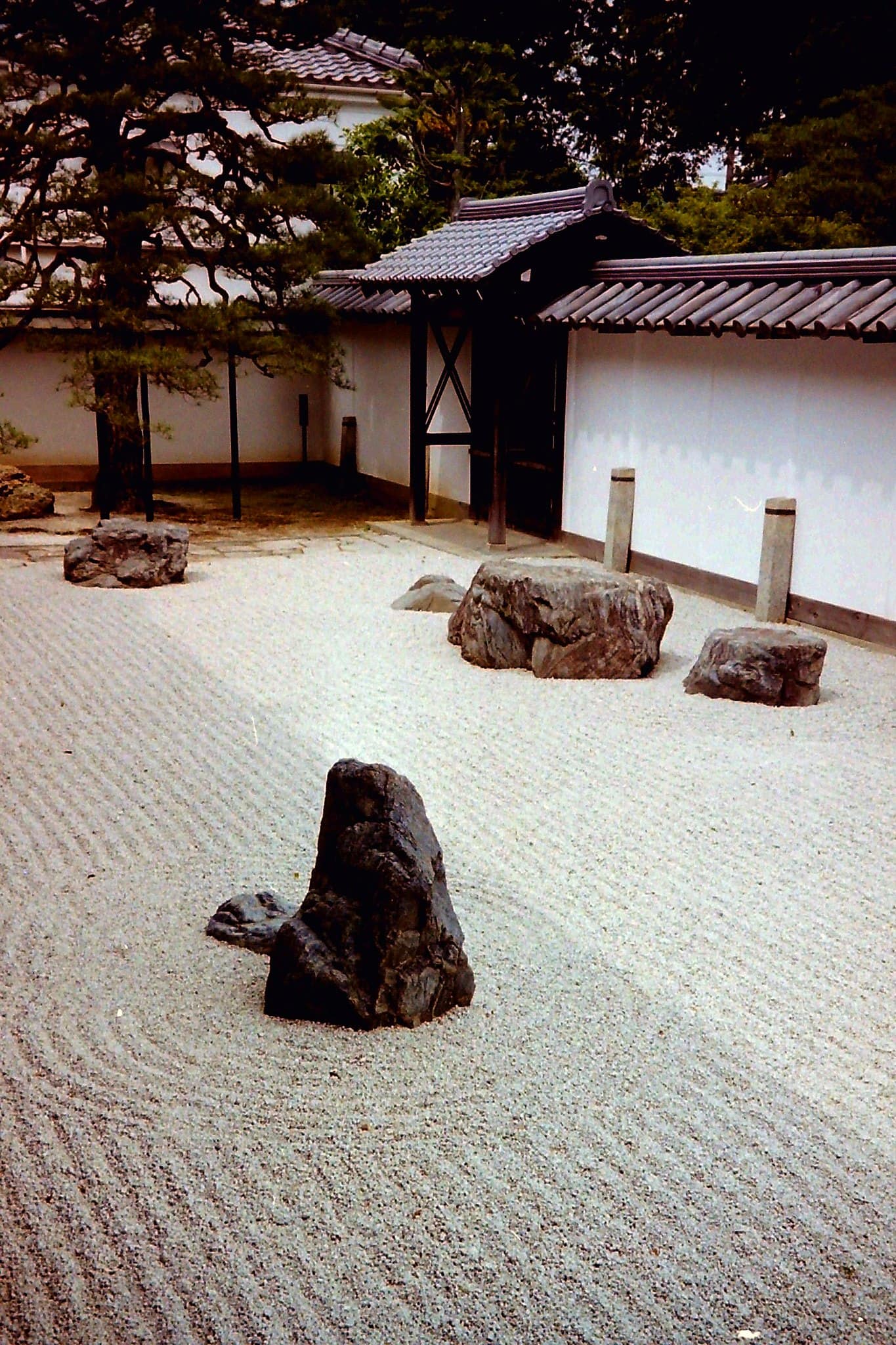
Japan is an example of a country where simplicity and complexity blend. Must blend, actually. In Japan, complexity needs simplicity. Japanese people living the complex social life need a simple way to escape that (eg. by engaging in karaoke or manga). This is what makes the country fascinating.
Switching between simplicity and complexity helps you to cope with daily challenges. After a busy day at work I love to watch cartoons with my kids. Our own minimalistic interior at home is a haven of peace in a busy world. Lesson learned.
Japan is awesome, I fell in love with the country before I even went for my first visit. This post described life lessons my stay in Japan taught me during 3 consecutive travels. What lessons did you take back home from your travels? I would love to hear them!
Are you traveling to Japan for the first time? Check this great overview with 15 useful tips by fellow travel blogger Kris and Sylvia.
Related post on this blog:
135 comments
[…] in how people live together, how customers are approached and how to respect one another. It’s a lesson learned that you take home with […]
[…] 2010 I wrote a post about “7 life lessons learned from living in Japan”, you might remember it. For me, launching this post created a ripple effect that left me […]
I really like the lessons you chose to highlight. You’re so right about there being more than meets the eye– it’s true of anyone in any culture. I teach ESL and have had many students from Japan. I have always enjoyed getting to know them– their culture is unique, and they really are lovely people. I went to Japan on a 3-day quick stopover on my way to Indonesia, but I loved it and can’t wait to go back.
Jenna, you should try to go back. Great to know that a 3-day stopover makes you want to see more of the country, that’s a good start. We are big fans of all cultures Asian, but Japan always felt a bit different, special.
Great stuff from you, man. Ive read your stuff before and youre just too awesome. I love what youve got here, love what youre saying and the way you say it. You make it entertaining and you still manage to keep it smart. I cant wait to read more from you. This is really a great blog. Ganbatte!!! 🙂
Wow. Your entry is so worthy to read. Many lesson you’ve shared with us. You made japan more interested. I like japan for their high-technologies and the art that never fades like dances and theater. Now, I will include japan for my list of countries that I prefer to visit someday 🙂
wooow , great post , I never realized that japan can teach u all of those stuff ! 😉
[…] 7 Lessons Learned from Living in Japan […]
Truth!! We visited Japan as a family a few years ago and it made such an impact on us. We still pull from this journey in our daily lifes. Of all the things we have learned and experienced Japan is a highlight and will be for years to come! Thanks for reminding us of this wonderful place!!!
Great blog. We could all learn a lot from this. The politeness, respect, punctuality, simplicity, etc. It makes me want to go there and experience everything.
I have been fascinated with Japan and Japanese culture for some time now. It is one of the places I look forward to visiting in the future. I’ve heard stories about the country and its people from my mother. She has spent time there. Words that come to mind for this country and people include: serene, beautiful, orderly, respectful, sincere, mindful, gracious, gentle, and aware.
I visited the Byodo-In Temple in Oahu. It mesmerized me and was the highlight of my trip. Here’s a post about it on my blog, with pictures, that I think you will enjoy reading and viewing.
http://designhouse9.wordpress.com/2010/07/22/i-found-heaven-on-oahu/
Hi Kate,
Great pictures and indeed these kinds of feelings you will experience when, for example, strolling around temple grounds in Kyoto. I am sure your mother’s stories inspire you to visit the country one day. I am sure we will take our children to Japan, it’s just a matter of time..
Great post, well conceived, clear, concise, with useful information, adding significant data for those of us fascinated by Japan (but not knowing it firsthand)
Thank you for sharing these observations. I have been fascinated with Japan for years and years now, but there are still things I am learning. You taught me some new things today. ^_^
*bows* Domo arigato!
I would love to do something like this…experience another culture… it’s so intriguing to me! Thanks for sharing!
http://humanitarikim.wordpress.com/
Well done on being Freshly Pressed! Your post was well thought out, and quite intersting. We would have an amazing society if we all just followed those rules.
xx
I liked it just from your words, it is a nice experience you have got, wish one day i test that too, thanks for sharing your precious experience !
These are some nice things you picked up, thanks for sharing them with us I’m sure some of us will find it helpful in life.
Great post! I haven’t visit Japan, but it’s already in my list! I did stop at Narita for several times for flight transits, but that didn’t count 🙂 . The next time I come there, I hope it will be a visit.
I lived in US for two years, and I also find how Asian values were highly respected by people with international-intercultural experiences as you are. I, however, also found some of my American fellows did not share the same feelings, just because they had no prior international-intercultural experiences (before I met them. of course). As for myself, my experience there also made me learn to respect some of American values I’ve experiences through my interaction with them.
So, I’m fully appreciate what you are advocating on: Travels, open your heart and mind, and the precious experiences will give you abundance of lesson-learned moments!
Thanks for sharing this!
Great comment, thanks James. Both Asian and Western values have their advantages and indeed traveling creates awesome opportunities to live and learn different cultures.
I love Japan for customer services, I once got chased out of a shop by a security guard……. because I forgot my change haha, i was very confused at first. That would never happen here in the UK.
I agree with everything you said. I been learning about the Japanese culture and learning there language for some time and it has been such a interesting journey to me. I have so much more respect for the Culture. Interesting blog.
Hi. I’m currently studying in The Netherlands now, in den Haag. I plan to go back to my country next year, so I can only write lessons learned next year ^_^. Anyway, I’m from Indonesia, although a lot of dutch heritage can be found there, it s always different in culture and way of life here.
Hi Griyatawang! Great thing you study here in the Netherlands! We traveled the island of Bali in July this year (but I guess you have already discovered my blog posts about that travel 🙂 There are some similarities with Japanese culture, but also big differences. I loved your country!
Very nice post.
I have lived in Japan for about 17 years and agree with what you have written about the Japanese.
Dave
Emiel, congratulations for the Retweet by Lonely Planet and on Freshly Pressed by Wordpress AND thank you for doing the Life Lesson Series for us. I am delighted you chose to glorify (within reason :)) one of my favorite countries, Japan. As far as I am concerned, I loved the deep respect, the unmatched level of service, the divine food and the exotic nature of this country. Maybe we will meet there some day for some real Sake and Sushi! 🙂
Wouldn’t that be great: a meet-up in Japan! I have to thank you as well Farnoosh, without your continuous support and encouragement I wouldn’t be here, almost celebrating the first anniversary of my blog! Arigatoo gozaimasu!
doy itashi mashite! This would look so much prettier in the alphabet it is meant to be written….but you are most welcome my friend, Emiel. With writing like yours, you must write and be read. Period. Keep it up! 🙂
ps: Happy new year :)!
A great eye opener,indeed. Japanese will have many lessons to be followed.A great nation that stood up after the nuclear disaster. They bond together strongly with their Human values. They are the example.
Will visit japan at least once in my life time.
Even I have heard a lot about Japan everybody praises this country. Even i would like to visit it and have a look at it’s culture. I have traveled much, so can’t tell you about my experience. I have been lucky enough to explore…… Wish you a happy new year.!!
I have been to japan several times, and I found that the 7 lessons are very true.
My Japanese friends are very generous.
I remember when I went back home from Kitakyushu through Fukuoka. My taxi to Fukuoka scheduled at 6.30 in the morning, at 6.20 I went down to lobby for check out. And I was very surprised that 3 Japanese friends were at the lobby just to say good bye. I only met them not more than 5 minutes, but they came to see me at my hotel early in the morning, only for saying good bye. Amazing!
Amazing indeed, Togar! I think I can understand why they came to say goodbye, and so do you I guess. Thanks for sharing this story!
From the end of the nineties to the mid 2005 I imported vehicles from Japan. Doing business with the Japanese is a pleasure. If they say they will do something, they do and on time. Politeness is displayed in almost everything they do and they are very proud people.
I think as a country they have opened up as I have meet many different people from just as many different countries doing business with the Japanese. It is very mulicultural in some parts of Japan.
Great post, it brought back many wonderful memories, especially of the Karaoke nights.
Glad my post brought back some great memories Graeme! I also very much liked the karoake nights 🙂
I know people who do not have the patience to do business with Japanese. But if you know about the Japanese business culture, it can indeed be a pleasure.
great read! it seems like japan and respect go very hand in hand. i see it a lot in movies, books and stories people tell me. love the list and now i must go to japan to see for myself.
Hey, this is a great post, deserving of the front page. I adore Japanese culture and would like to take a trip to Japan as soon as possible. I hope to learn the lessons that you have through my own experiences. All their Japanese differences, from slight and insignificant to embedded and important; it makes them so fascinating and so far removed from our infectious Western culture. I hope they never change.
You should visit, Lee of little faith. And I am sure you will return with lots of inspiration for writing poems!
Modification: That article really made me want to move to Japan right away!
I hope one day I can visit Japan, especially to try the sushi there. How was the food culture in Japan?
Food culture, wow that’s a totally different subject, but I like it. Food is great in Japan. The culture of preparing dinner together at the table is a great way of socializing. I loved udon, yakisoba, yakitori and I could go on an on. Try to search for okonomiyaki (kind of pancakes with vegetables), very good!
[…] I was honoured to receive an invitation to share my experiences for the Life Lessons series, a project hosted by Abubakar Jamil in collaboration with Farnoosh Brock. This post will combine travel and self improvement, centered around my personal experiences from living in Japan. Here we go. 7 appears to be a universally lucky or holy number. Also in Japan. The Japanese celebrate the seventh day after a baby's birth, and mourn the seventh day and … Read More […]
Emiel,
This was such a simple reflection, yet one of the most poignant that I have had the pleasure of reading. In my daily life as a teacher, I try to instill the first five traits you mentioned in my students. While at the same time, I try to guide them to see that there always needs to be a balance in what they do; as you eluded to in the last two points. As a soon to be father, I know I will also teach my daughter these same simple ideas. Great post!
Wow, thank you Dan, I very much appreciate your feedback. I never knew my post could have such an effect on people.
Congratulations with your soon to be born daughter! I wish you lots of happiness with your new family.
Congrats for making it to Freshly Pressed.
I too love Japan and the lessons it has taught me. I had the honour of living in Sapporo for 3 years, and then Kyoto for 1 1/2 years. In Sapporo is where I studied Japanese, and learned how to snowboard in beautiful fresh powder. I also travelled all over Japan during those 3 years. What an amazing opportunity. In Kyoto, my first child was born. He just turned 10 years old last week, and it seems like yesterday.
I learned how to be patient, and to be more punctual than I already was. I also loved the respect and customer service provided when a tip is never expected, because the tipping system does not exist. Excellent service is just always expected.
I also learned to love the tradition of never pouring your own drink.
Great comment Jessica, thank you! I guess you don’t live in Japan anymore, but I fully understand the amazing experience it has been. I have never been to Hokkaido (although I love the Sapporo beer lol) We traveled from Tokyo to Kansai area and further to Kyushu.
I think we share the same feelings about our Japan experiences. I guess learning to speak Japanese helps a lot. Not only to travel the country, but also to discover how respect and politeness is already embedded in the language!
Now your post had made me want to go to Japan even more. Learning these values within three months proves that Japan sure is an amazing country. 🙂
I’ve always wanted to go to Japan. That’s why I’m going to study and work hard to make this dream come true. 🙂
Good idea Sarah! I also just read your blog post on Freshly Pressed. Indeed it’s a great honor to be promoted as Freshly Pressed on Wordpress, it’s exciting and encouraging at the same time!
Thank you for dropping by my blog, and for reading my post. 😀
Well, I have to say you deserve to be in the Freshly Pressed.You’re awesome! 🙂
Enjoyed your posting!
My wife and daughters and I visited Japan 30 years ago when the kids were 8 and 10. Most of the adults we encountered were reserved and avoided eye contact. But teenagers who were learning English in school would often come up to us and engage in conversation. They probably would not have done this if we were traveling without our daughters. Good thing we planned to bring the kids! I also remember lots of little girls around the ages of 5 and 6 pointing at my then black beard and giggling.
Indeed I read in your CrowCanyon blog that you have been around the world already! And I fully agree with your statement that traveling with kids opens doors that stay closed to other travelers. That’s why we decided to take our children traveling the world and encounter new cultures and people as early in their lives as possible. Almost half of my blog posts I write about our family travel adventures, I am sure you will love them!
I hope to travel to Japan someday. They have a fascinating culture. The largest Japanese community outside of Japan in the world is here in São Paulo, the biggest city of Brazil, and it’s called “Liberdade” (“Freedom”).
Hi!
Great post! I have a sister who studied in Japan for a semester and therefore I read your blog to her. Since she had a different experience from you while she stayed in Japan, we both are wondering if you had the privilege to experience these 7 lessons because you are white? My sister is Asian and they took her as just another Asian girl in Japan while you, being a white foreigner gave you more privilege? Of course, the people she met were probably different from the people you interacted with but we would like to hear your opinion. Thank you.
Xiong Qing, good point! You ask for my opinion..well I guess being a Westerner in Japan does make a difference (maybe even more back in the nineties). However, talking about respect and punctuality, I believe there should be no difference. Japanese fully respect elderly people, their parents and teachers, no matter their background. But again, I am glad you wrote this comment because my story is still from a Western perspective.
>Japan is awesome, I fell in love with the country…
I agree. That’s why I decided to stay..
Hoi Emiel!
Thank you for sharing this great story!
I’m Dutch and living in Shanghai (if you’re ever in the neighbourhood, let me know!). My students call me Lăoshī and greet me with a bow when I enter the classroom. In the beginning I found this very strange and a little disturbing, but I changed it a bit around, where I bow for them too. The teacher should respect his students as well I think.
Living here is great and in a few years I want to go to Japan, I guess if I work and travel, by the time I’m old and tired I’ve seen the world!
Zàijiàn!
http://lizaroos.wordpress.com
Dank je wel Liza. I am sure when you return to Holland (if you ever will) you feel enriched with all these Asian cultural influences!
I had to Tweet your Lost in Translation post, hilarious!
Enjoy your time in Shanghai and when I’m around, I will let you know!
Thanks! I’m making a series of dressed poodles and sleeping people now, all very Chinese!
Thank u for a great summary. Japanese culture is indeed a mind-boggling experience. I have seen many visitors ignoring the need to adapt, but rather try to impose their cultures upon their hosts. Many went away with bruises, Japanese are strong like that.
I make it a point to visit Japan when I feel my life go wry. Others may not understand why I leap from one chaos to another becos Japan must seem like a chaotic country to them with all that people and traffic, but in Japan, the underlying simplistic calm is what will straighten me out and put me back on track. I could never explain that well enough to be understood. Kudos to you for making it easier to understand.
Wow, thank you Fukustoshin for these wonderful words! I am happy to learn that my little blog post helped you to grasp the meaning of Japanese culture.
Brilliant post. What I noticed first about Japan was the lack of smells and sound. No assaulting the senses there.
I love the pictures on your photoblog, not only the Japanese but also the Greek ones! Thanks for your compliment.
This is great to see your post! give me an imagination about japan coz im coming to japan this February! Thanks for your amazing writting
Congratulations on freshly pressed! 🙂 I like this article. I think I learned a lot about life just by reading it. Simple = complex and vice versa. Thanks
Thanks foodtable, I am happy to know that you learned a lot about life from reading my words. Good luck with your San Fransisco Bay area food blog!
Japan IS a amazing country, so much to learn, so different from the West, but once you are there you realize it’s a great country. Would love to go there again in the future.
and your post is SO true.
If you have the chance, go there. You will love the difference. Thanks for your comment vixstar.
Excellent post. Very well written. It has been a life long dream to visit Japan, hopefully in few years it will come true. However I have been to Bangkok and I can relate to some of the points you made which are quintessential elements of these cultures like “politeness”, “punctuality”, “Blend of simplicity and complexity”. The most imporant lesson I learned in Bangkok was “to love and respect nature and include it in your daily day life, as an act of prayer and gratitude”.
Amna, I think you just added a no. 8 to the lessons learned list: love and respect nature. That indeed is an important part of Asian culture, Japan is no expection to that. Thanks for contributing!
Thank you for your kind reply Emiel.
Your post has got me thinking about various aspects of Western culture and I may write about it soon.
Thank you for sharing, this is excellent! I agree with punctuality, used to be a flaw of mine but I have worked hard to address it. Japan sounds like a wonderful place to learn from.
Thanks Maria. Japan is indeed a wonderful place to learn from. Good luck with your journalism career!
Thanks for sharing these valuable insights. Having lived in Asia, I appreciate your sensitive approach to making these cultural observations.
I am running a retrospective on my blog over the holiday–posts about the year I spent living in Vietnam. You might enjoy today’s called “Babel-ed by it All: a Retrospective.”
Though I am in the US for Christmas, my partner and I now call Haiti home.
Happy New Year,
Kathy
Dear Kathy, thanks for your comment. I read your post about Vietnam, I love that country as well. I have been there twice, from north to south and it is so beautiful. I can imagine you find it difficult to find the words to describe all your experiences and emotions.
Then again, working in Port-au-Prince is probably difficult as well. I value the support you give to the people that suffered so badly from that earthquake. Keep on doing the good work!
[…] I was honoured to receive an invitation to share my experiences for the Life Lessons series, a project hosted by Abubakar Jamil in collaboration with Farnoosh Brock. This post will combine travel and self improvement, centered around my personal experiences from living in Japan. Here we go. 7 appears to be a universally lucky or holy number. Also in Japan. The Japanese celebrate the seventh day after a baby's birth, and mourn the seventh day and … Read More […]
[…] 7 Lessons learned from living in Japan (via The Act of Traveling) I was honoured to receive an invitation to share my experiences for the Life Lessons series, a project hosted by Abubakar Jamil in collaboration with Farnoosh Brock. This post will combine travel and self improvement, centered around my personal experiences from living in Japan. Here we go. 7 appears to be a universally lucky or holy number. Also in Japan. The Japanese celebrate the seventh day after a baby's birth, and mourn the seventh day and … Read More […]
I would really like to go over there. A friend of mine moved there and invited me, I will defintely be going!!
Go! Run, Lakia, Run!
Love it! Simplicity and complexity are mixed in this post! It is my dream, that in one day, I will visit and will work in Japan. I really do not know why, but there is something that is pushing me there.
Your post let me know that are many things that must be discover and explore in Japan, more or less in the their ways..
Thank you for sharing your experience!
No problem, I’m glad my story helped you pushing your dream into the right direction.
True politeness here in Japan is often very artificial; it is required part of the job. You enter they greet you you leave they acknowledge your departure and thank you. Yet, for the most part it’s not from the heart it’s part of their job training. I love the country, I love the people, I live here my wife is Okinawan but the culture thank God is changing; slowly but changing. The only problem with that is that it is adopting too much of the Western culture. Oh Well, you can’t escape “hip hop” no matter where you go!
You are so right ginowan777, many of it is artificial. But it has roots somewhere in their culture and I truly think we can learn from it. If only people here could borrow some of that artificial politeness, that would be a great start.
And no way you can escape hip hop, gothic or any US teenage popstar LOL.
ahhh…i think you just made the far east jump ahead of south america on my ‘to do’ list.
Sorry…, I guess?? But wait for one of my nex posts on Peru (Peru beyond Machu Picchu)…I’m sure it will change your mind again 🙂
Well put. I visited Japan as a teenager and always encourage friends to travel there if possible. I hope go back some time next year to explore it again in my adult years.
Thank you, keep encouraging your friends to travel to this amazing country (and to travel in general!)
Well said….
After traveling in Italy, you learn one main thing: don’t plan. Plan to NOT plan. Plan to wander aimlessly through cobblestone streets with no agenda and no aim. Plan to see something new every day and marvel at it. Plan to laugh at the small things and unlock new experiences. Plan to let your days as a tourist be guided by nothing but sheer intuition and opportunity.
Great post! Kudos on being FP!
http://miracleon32ndstreet.wordpress.com
Great advice: plan to NOT plan! Not planning will certainly unlock new experiences. I agree that not planning is one of the best travel tips.
I guess you loved my post on Rome, Italy as well.
Earlier this year I visited Hakone Gardens in Saratoga, CA with my mother. We enjoyed some parts of it very much. However, we had trouble locating the zen garden, and later realized why it was so hard to see: first, it was very small, second…it had (*gasp*) weeds growing through the gravel. I kept thinking that this would NEVER be allowed in Japan!
One thing I took away from Hakone Gardens is that the designs, as simple as they can be, can also involve complex effort. For example, I learned that bamboo can have different colors and shapes and textures according to how it is grown, or trained.
Great story! Although a zen garden looks simple, one can experience it for hours. When visiting Japan, these are places to meditate or just relax.
Funny to find the words “Reflections on Simplicity and Chaos” on your blog 🙂
your blog is such a lovely find! i love reading about things to learn about travel, whether it’s general, tips, or about culture.
i’ve always been so fascinated with japan.
I guess Japan is like a Kingdom of Random and Weird 🙂
Please do continue to read about travel!
japan is such an amazing country, and a complete and pleasant culture shock for us westerners! i count myself very lucky to have been to Tokyo, Osaka, Kyoto, and Koyasan 🙂
great post!!
Love your Urban Optimist blog Leanne! You have been lucky indeed to travel to all these Japanese cities (+ one mountain).
[…] I was honoured to receive an invitation to share my experiences for the Life Lessons series, a project hosted by Abubakar Jamil in collaboration with Farnoosh Brock. This post will combine travel and self improvement, centered around my personal experiences from living in Japan. Here we go. 7 appears to be a universally lucky or holy number. Also in Japan. The Japanese celebrate the seventh day after a baby's birth, and mourn the seventh day and … Read More […]
I appreciate the post, particularily about the Japanese being reserved, not revealing much of their true selves.
I’m born in Canada but of parents from China. One thing for certain, I am glad not to be bound by the societal expectations for educated Japanese women..who seem to be still held back..even despite their society’s high level of literacy, economic/technological sophistication. I am certain many Japanese women who immigrate over to North America might share the same feeling..especially if they want to break free of expectations that don’t meet their personal plans.
I guess you’re right Jean. Glad you appreciated the post. I guess the cycling takes you to many interesting places as well!
Yes, cycling has but not yet over to Asia yet. Seriously. I agree the punctuality tendency can be helpful as long as people don’t obsess over it all the time. To me personally, various aspects of traditional Chinese culture seem to have much more spontaneity to a point of disorder vs. the calm, controlled and peaceful-looking exterior of Japanese culture.
But look no further than the Japaness erotic (strange, due to censorship which leads to strange suggestive visuals) comic books, and other wierd sexual, as well sometimes violent (ninja, samarai history) aspects that there has been/is a explosive, dark expression underneath the Japanese veneer of discipline, peaceful looking self-control. Somehow I prefer some other Asian cultures which may have more open ordinary, daily unbridled sloppiness, cacophony, disorganization…at least freedom for self-expression is out in open.
But I love the Japanese traditional culture for their gardens, cuisine, aesthetic traditional expression.
I wonder if the Japanese as a whole in Japan welcome many immigrants into their small country. (Chinese, Koreans, etc.) I’ve heard the opposite how some treat other Asians who end up living there. But then I’ve never lived there.
Japan is one of the countries that I always wanna go back after visiting.
And yes.. the train, especially the Shinkansan, they are always on time. lol
[…] this link: 7 Lessons learned from living in Japan Posted on 2010 年 12 月 28 日 by lanshang1460. This entry was posted in Travel, 未分类 and […]
awesome. i love going to a foreign environment and learning about how others live. i wish punctuality is something that is considered important in the US.
In some cultures punctuality is not an issue, it is even strange when you appear on time for your appointment… But hey, we go for the Japanese way!
Checked your blog and found a nice one: Simplicity is not the goal. It is the by-product of a good idea and modest expectations.
I love your blog. I have subscribed to it. Thank you for the link about the seven folklore figures in Japan. Fascinating. The seven points are so important. Would love to read more about your travels. Thanx.
Thanks for subscribing. Hope you find a lot of travel inspiration reading my blog!
Thank you for your post. I appreciate its simplicity. I almost taught English in Japan and always wondered what it may have been like if I had signed the contract to do so back in 1999. I know this much: I would not have met my husband had I gone overseas. But there is something about Japan that always calls out to me… I don’t know what it is. Sure would like to see it for myself.
You should go and see it for yourself, Beloved! Why did you not sign the contract? Was it fear for an unknown country? Glad to know this post got you thinking again 🙂
Found you on the front page. I really like this entry.
Your take on Japan is a fresh breath of air for me as all the ones I’ve seen have dealt with it as a heavenly castle where everybody embraces Japanese pop and Rilakkuma bears. In reality, yes, they are heavily promoted throughout the largest cities of the nation, but even as a young girl, I sensed that there has always been a lot more to it than that, like a rich history and decidedly (surprisingly?) simple yet elegant way of living, especially when it comes to nature/landscaping, art, and technology.
I especially enjoyed #4. I’m tired of all these people going around saying, “Well, Japanese people are closed because they’ve never been taken over.” They may not have been taken over before in the past, instead doing the reverse, but you would expect more considering they dealt with European traders and piped up at American influence. But in recent years, like you said, that’s all been overshadowed with the end of WWII and the population’s reluctance to have children or even marry (the latter resulting in a noticeable trend of shotgun weddings).
I’ve never been. Being East Asian myself (Chinese descent), I guess that has to do with why I’m not so interested in it. I have a lot of Korean friends and I’m assuming they feel the same way. I’ve noticed it’s always European or Southeast Asian descent who feel so interested in Japan that they have to go, unless, of course, we’re talking about business. But I’m sure it must have been a nice experience.
Anyway, nice pictures.
Dear Esther,
I love your comment, thanks for that. I especially value it as my post is written from a European perspective. You, with an East Asian background saying that ‘my take on Japan is a fresh breath of air’ means a lot, really.
Please go ahead with blogging, Always Esther!
Yeah, this is my first time using Wordpress, so I’m just trying to get everything set up before I officially write anything.
And this is actually a really nice theme. (I’m currently in the process of modifying a custom one as I type.) I’m just wondering: is it a custom theme, or did it come out of Wordpress? I can’t tell.
Forgot to add: I’m glad my comment was of some use. Did you see Rilakkuma in Japan?
Esther, my theme is a Wordpress theme, nothing customized. You can spend hours and hours on the design, but I guess content is more important.
And I’m sorry, but I was not aware of Rilakkuma…
Good luck with setting up your own blog!
Great post – and thanks for sharing your lessons. I especially like #5 – “there’s more beneath the surface” and think that is true of all people and all places.
Some things I learned in Hong Kong:
1. joy is expressed in lots of noise (cars honking, people talking, and a general buzz)
2. when people push you, they are not being rude, but actually politely saying “move along, others need this space”
Congrats on being freshly pressed!
http://workingtechmom.wordpress.com
Thanks WorkingTechMom, I like your lesson learned about pushing people!
I just tweeted your Lake Ontario post: the beauty of simple things in life. Different place compared to Hong Kong!
Wonderful Read!!
what a beautiful post! I was lucky enough to spend a few weeks in Japan when I was a teenager. It wasn’t enough time, and I wasn’t old enough to appreciate it.
I love the simplicity/complexity duality of so many Japanese traditions!
Hi Little Red Reviewer!
Thanks for your compliment. A few weeks in Japan could certainly be enough, but I agree that as a young girl you were unable to understand the country. Maybe a next time?
Hey Emiel, I just stumbled upon this entry and think it’s a great reflection of what you learned. I’m an American exchange student living in Germany right now and I also like making such cultural comparisons.
I really liked your quote, “strict organization prevents chaos, but over-organizing is the instigator of dullness”, do you find that was one of the main clashes you had with the Japanese culture?
Also, I read that you lived there for 3 months, did you find a deep culture shock upon going back home, and how long before you noticed a change in values?
Thanks for the good post,
Joseph
Thanks Joseph!
Over-organizing was not the main clash I had with Japanese culture. I just found it unbelievable and quite irritating I guess.
The culture shock appeared when I first visited Japan. When I returned home there was also a kind of culture shock, but I managed to tone it down because I knew I had some great life lessons learned in Japan!
A culture shock will never leave you. Luckily, because these ‘shocks’ enrich you as a person. Good luck with your stay in Germany.
Thank You for this article. It was interesting and captivating read. Awesome post.
I really don’t like the rudeness in the larger part of the world.
Thank You for liking the article! Hope it helps to eliminate some of the rudeness…only for a tiny little bit, that would do.
Oh, I love this blog! Japan is definitely a place I’d love to travel. Three points I loved that you shared: (1) Punctuality. It’s always been something I’m known for (I guess ’cause I’m part Asian), but it’s true it does equal respect and people admire you or even remember you for it–just wish some people I knew regarded it more. (2) There’s more beneath the surface. I don’t have a selective perception of people based on what I see but more on what they do and say. My motto: “never judge a book by its cover.” (3) Blend of simplicity and complexity. Simple is good, but training your mind to think through that simplicity is even better–did that make sense? Oh, well…Japan is on my list of go-to places. Thanks for sharing these points. I think I’ll forward to a sister who loves Japan as well.
Hello Indy girl living in New York! 🙂
You should really try to visit Japan, your remarks are spot on! Thanks for your contribution.
Training your mind to think through that simplicity…I guess that is the strength of the Japanese mind..
I was fortunate enough to spend two weeks in Japan in 2003 as part of an exchange program. I found everyone I encountered to be extremely kind and welcoming, albeit in the reserved manner you mentioned.
I was 19 at the time, and the trip taught me what “culture shock” feels like, but also that if I embrace that shock and dive right in, I can learn amazing new things about the world, other people, and even myself. I grew up a lot on that trip, and when I got home, people saw it instantly.
Thank you for sharing these lessons.
Wow, great story, thanks for your comment! This proves that a so-called ‘culture-shock’ can be very beneficial and can change your life. I guess we both agree that everyone should dive into any culture-shock that comes accross their paths! Glad that Japan made you a different person.
Wow you have really “gotten around”.
I can definitely appreciate the zen like foundation of Japan though.
Historian Will Durant some decades ago concluded many Westerners, not just Americans are adrift in the Age of the Short Attention Span.
We do lack balance now days in our hyper sensitive and overly complex system that is obvious.
Hello Dream Chaser! I indeed feel very lucky to have been able to travel so extensively…and there are so many more stories to tell. My blog is only 9 months old 🙂
I agree about the short attention span. Are we able to sit down in a zen garden and look at it for an hour (or even 10 minutes)?
Great post. I am fascinated with Japan and its people and it is the one country I wish I could visit. Politeness, yes, would be nice, woudln’t it be. One walks into a store here and people do not even look at you. A friendly hello would be nice.
Allanah, you should visit Japan if you ever get the chance. And when you return to your local shop I’m sure you want to scream out to people to be more polite 🙂 Glad you liked the post.
We can all learn a lot from many of these tenets. I’m a huge fan of infusing more politeness and respect into my own American culture, and I think the blend of simplicity and complexity is an art form unto itself!
Great post — thank you!
🙂
Thanks Mikalee and I agree with you that we can all learn from these values. I like how you described the blend of simplicity and complexity as an art form!
What a great story, I too have found similar experiences in Bangkok (and indeed most of Asia) it makes you realise how poorly served and perhaps surley Brits and Europeans really are.
Thanks John! You’re right that politeness is far more embedded in Asian cultures, I am glad I have been able to experience that a couple of times during travels.
Emiel,
Thank you for this lovely post and being a part of the Life Lessons Series. I enjoyed the post and the lessons you brought with you from Japan. 🙂
Dear Abubakar, your Life Lessons series are great and it has been a pleasure and an honor for me to participate.
This is one of the most beautiful post’s I’ve encountered. It is refreshing to see there are people in the world who, as a whole society, value respect and politeness in so many forms. Japan’s beauty of properly placed simplicity is unheard of with our chaotic and ungrateful culture.